
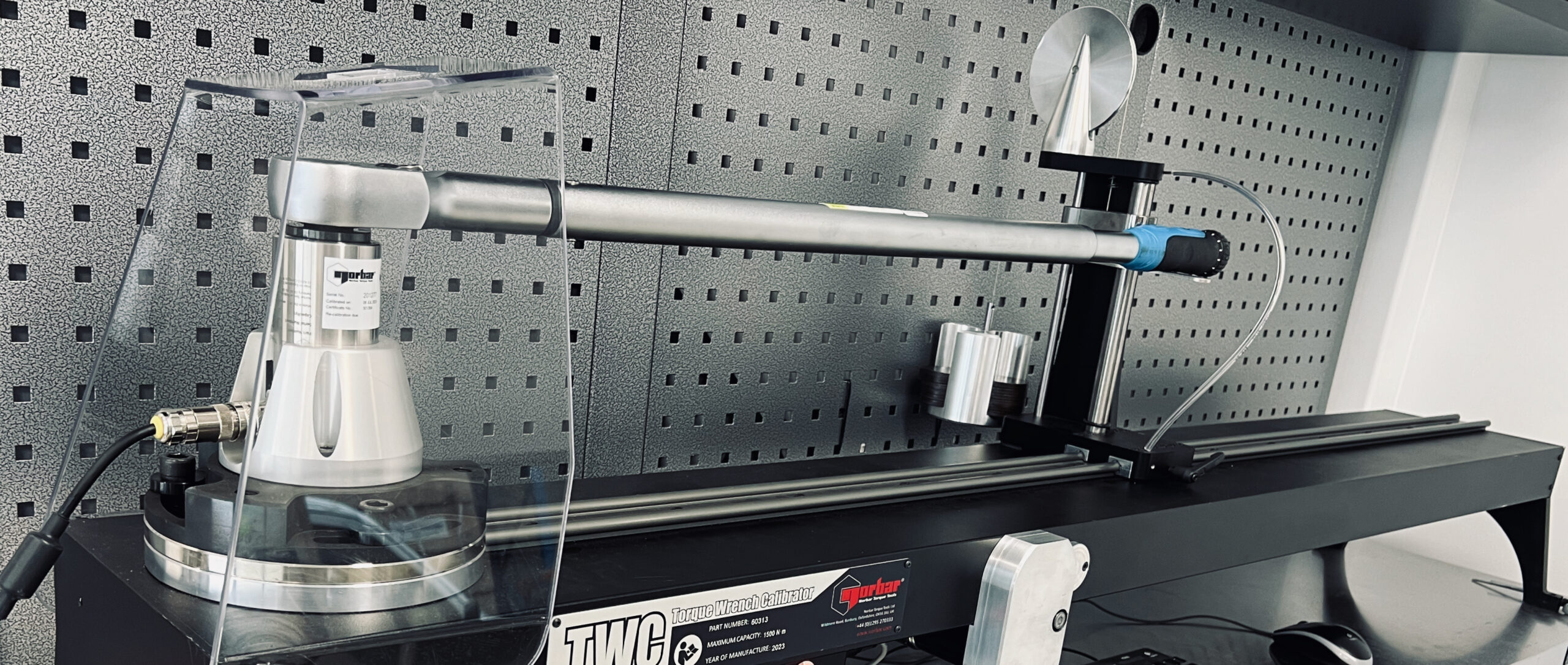

What Does Calibration Include?
Calibration checks that your torque wrench performs as the manufacturer intended. It also includes extra testing to calculate measurement uncertainty. As a result, you gain a deeper understanding of how your tool performs across its working range.
During calibration, we verify that your tool’s measurements trace back to recognised national and international standards. Therefore, every result can be linked step-by-step to a trusted reference. This gives you confidence in the accuracy of your equipment.
This level of professional torque calibration is essential for industries that require documented measurement uncertainty and high confidence in tool performance.
Please see below for an example of our Calibration Certificate.

Is Your Torque Wrench Calibrated to the Latest Standard?
Calibration practices are continually evolving to meet modern accuracy and compliance requirements. Some companies still reference the withdrawn Australian Standard AS4115-1993, which has been obsolete since 2017. Others cite ASME B107.300-2021; however, this American standard primarily covers the design and manufacturing of torque wrenches, not their calibration.
At Torque Lab, we calibrate all torque tools according to the latest ISO 6789‑2:2017 standard, ensuring reliable, traceable, and fully compliant results.
We urge you to check your most recent calibration certificate. Is your torque wrench calibrated to the latest international standards?
Declaration of Conformance vs. Calibration Certificate
Please consult the table below in order to help you decide whether you need a Declaration of Conformance, or a Calibration Certificate for your Torque Wrench.

Which One is Right for You?
For many organisations, a Declaration of Conformance is enough. It confirms that the tool operates correctly according to the manufacturer’s specifications. In fact, ISO 6789 Part 1 Declarations of Conformance now replace the withdrawn AS 4115 calibration approach.
However, some quality systems require more detailed information. If you need documented measurement uncertainty or deeper performance data, you will need a Calibration Certificate under ISO 6789 Part 2.
Still unsure which service suits your needs? We are here to help. At Torque Lab, we can guide you through the right option for your tools and compliance requirements. Choosing the correct service ensures accuracy, supports audits, and gives you peace of mind.
Frequently Asked Questions
What is the difference between a conformance check and a full calibration?
A conformance check (ISO 6789-1) verifies that a torque wrench meets the manufacturer’s specified tolerance at defined test points.
A calibration (ISO 6789-2) is more comprehensive. It includes environmental control requirements, defined measurement procedures, uncertainty evaluation, and formal traceability to national standards.
In short, a conformance check confirms performance. A calibration provides full measurement traceability and uncertainty.
Will I receive a calibration certificate?
Yes. A formal calibration certificate is issued for each calibrated tool. The certificate includes identification details, test points, results, tolerance comparison, and measurement uncertainty.
Is your Calibration traceable to national standards?
Yes. Our reference torque standards are calibrated against equipment traceable to Australian national measurement standards. This creates an unbroken chain of comparison back to national references.
Traceability is critical. Without it, results cannot be substantiated during audits or investigations. Each step in the traceability chain is documented and maintained to ensure confidence in the final measurement result.
Can I continue to use a torque wrench that has failed calibration?
From a compliance and risk perspective, continued use of a failed tool is not advisable. An out-of-tolerance torque wrench can result in under-tightening or over-tightening.
Consequences may include joint failure, equipment damage, safety risks, or audit non-conformance. The cost of incorrect torque often exceeds the cost of proper compliance.
How often should a torque wrench be Calibrated?
Calibration intervals depend on frequency of use, operating conditions, criticality of application, and internal quality system requirements.
A 12-month interval is common & recommended in general industry. However, high-use or safety-critical applications may justify shorter intervals.
Why are regular Calibration checks important?
Torque tools are precision mechanical devices subject to wear, fatigue, and drift. Springs relax. Components wear. Internal friction changes.
Regular calibration checks verifies the tools performance before errors accumulate. It supports quality system compliance, reduces liability exposure, and protects equipment from damage due to incorrect torque application.
Do you offer an onsite service?
After careful consideration, we have chosen not to offer onsite torque wrench verification services.
ISO 6789 (Parts 1 and 2) sets strict environmental requirements for verification. The standard requires the ambient temperature to be maintained between 18°C and 28°C, with the temperature remaining stable to within 1°C (1 Kelvin) during the verification process. In addition, the tool must be allowed to stabilise to the test environment before measurement begins.
In a controlled laboratory, this is straightforward. In a workshop, factory floor or mobile setup, it can be surprisingly difficult. Temperature can fluctuate due to air conditioning cycles, open roller doors, machinery, or even changes in weather. If the temperature drifts outside the permitted limits, the job must be stopped and restarted to remain compliant.
Rather than risk compromised results, we perform all calibrations in our controlled laboratory environment. This ensures every certificate issued is compliant with ISO 6789 and defensible during audits or quality reviews.
In short, we prioritise accuracy, traceability and compliance over convenience.
What environmental controls do you use during calibration?
All calibrations are performed in a temperature-controlled laboratory environment in accordance with ISO 6789 requirements. The standard specifies an ambient temperature range of 18°C to 28°C, with temperature stability maintained within 1 Kelvin during testing.
Temperature is continuously monitored. If environmental conditions drift outside permitted limits, testing must be paused or restarted to maintain compliance. This controlled approach ensures repeatable, reliable and standard-compliant results.
What is your turn around time?
Turnaround time depends on workload and whether repairs are required. Standard jobs are typically completed within 24 to 48 hours.
Tools requiring parts replacement or complex repair may take longer, particularly if components must be sourced from overseas manufacturers. We aim to provide realistic time frames rather than optimistic estimates.
Do I need to book in advance?
Advance booking is recommended, particularly for fleet calibrations or time-sensitive projects. Scheduling tools in advance allows us to manage laboratory capacity and minimise downtime.
However, individual tools can often be accommodated without formal booking.
Can you handle bulk fleet Calibration checks?
Yes. We regularly manage compliance programs for workshops and industrial fleets. Tools can be processed in structured batches to reduce operational disruption.
Planned scheduling helps avoid the common problem of large numbers of tools falling due simultaneously.
Do you service customers outside Victoria?
Yes. We service customers throughout Australia. Tools can be securely packaged and shipped to our laboratory for calibration and repair.
We recommend appropriate packaging to prevent transport damage, particularly for precision tools.
Looking for Torque Wrench Calibration Near You in Melbourne?
Ready to book your torque wrench calibration? Contact us today to arrange your service or to learn more about our testing options.
Capability
- Calibration Standard: ISO 6789 Part 2
- Calibration Range: 2.5 Nm - 1500 Nm
- Calibration Interval: 12 Months