
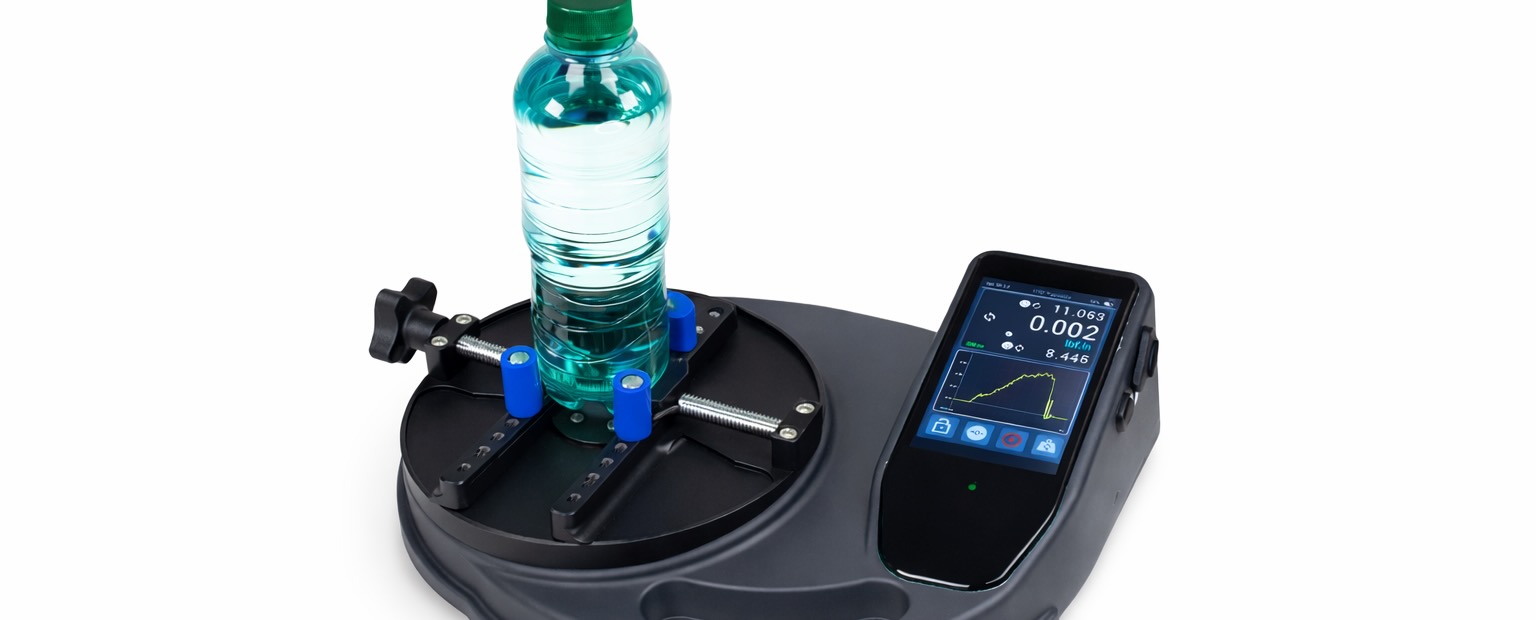
What Does a Bottle Cap Torque Tester Measure?
A bottle cap torque tester measures the force needed to tighten and loosen closures. This helps make sure products are sealed securely without being over-tightened or difficult to open. In addition, proper torque control helps prevent leaks, spoilage, and packaging failures.
Bottle cap torque testers are commonly used to:
-
Verify cap application and removal torque
-
Ensure caps are tight enough to prevent leaks
-
Ensure caps remain easy for consumers to open
-
Meet packaging quality standards and safety requirements
Typical items tested include:
-
Soft drink bottles
-
Pharmaceutical and medicine containers
-
Child-resistant closures
-
Cosmetic jars and tubes
-
Food bottles and condiment packaging
Why Bottle Cap Torque Tester Calibration Matters
Regular bottle cap torque tester calibration keeps your measurements accurate and traceable. In addition, it helps maintain consistent packaging performance. As a result, your packaging process stays consistent and compliant.
Regulatory Compliance
In addition, calibration supports standards and quality systems used in Australia and internationally, including TGA, FDA, and HACCP-based programs.
Operational Consistency
Accurate calibration helps maintain uniform torque application across packaging lines. Consequently, products remain sealed correctly without damaging closures.
Risk Reduction
Incorrect torque can lead to leaks, contamination, and customer complaints. Therefore, calibration is essential to reduce these risks.
Audit Readiness
Up-to-date calibration records make audits and inspections easier. In addition, they show control over packaging quality and measurement systems.
Calibration to BS 7882:2017
We calibrate bottle cap torque testers in accordance with BS 7882:2017, the recognised standard for torque measuring devices. As a result, this ensures reliable, repeatable, and traceable results for packaging quality control across Australia.
How Often Should a Bottle Cap Torque Tester Be Calibrated?
Most manufacturers calibrate their bottle cap torque testers each year. However, high-use environments or regulated industries may require more frequent calibration. For example, if your tester is used in pharmaceutical, food, or beverage production, shorter intervals help ensure ongoing measurement reliability.
In addition, regular calibration also reduces the risk of packaging failures caused by drift or wear in the measurement system.
Signs Your Torque Tester May Need Calibration
Your torque tester may need calibration if you notice:
-
Inconsistent torque readings between tests
-
Difficulty achieving repeatable measurements
-
Caps becoming too tight or too loose during production
-
Failed packaging integrity tests
-
Equipment that has been dropped, repaired, or relocated
If this happens, calibration helps restore confidence in your measurement system.
Talk to Us About Bottle Cap Torque Tester Calibration
Contact us to discuss your equipment, turnaround times, and freight options for interstate customers. We’re ready to help you keep your packaging process compliant and reliable.
Capability
- Calibration Standard: BS 7882:2017
- Calibration Interval: 12 Months