
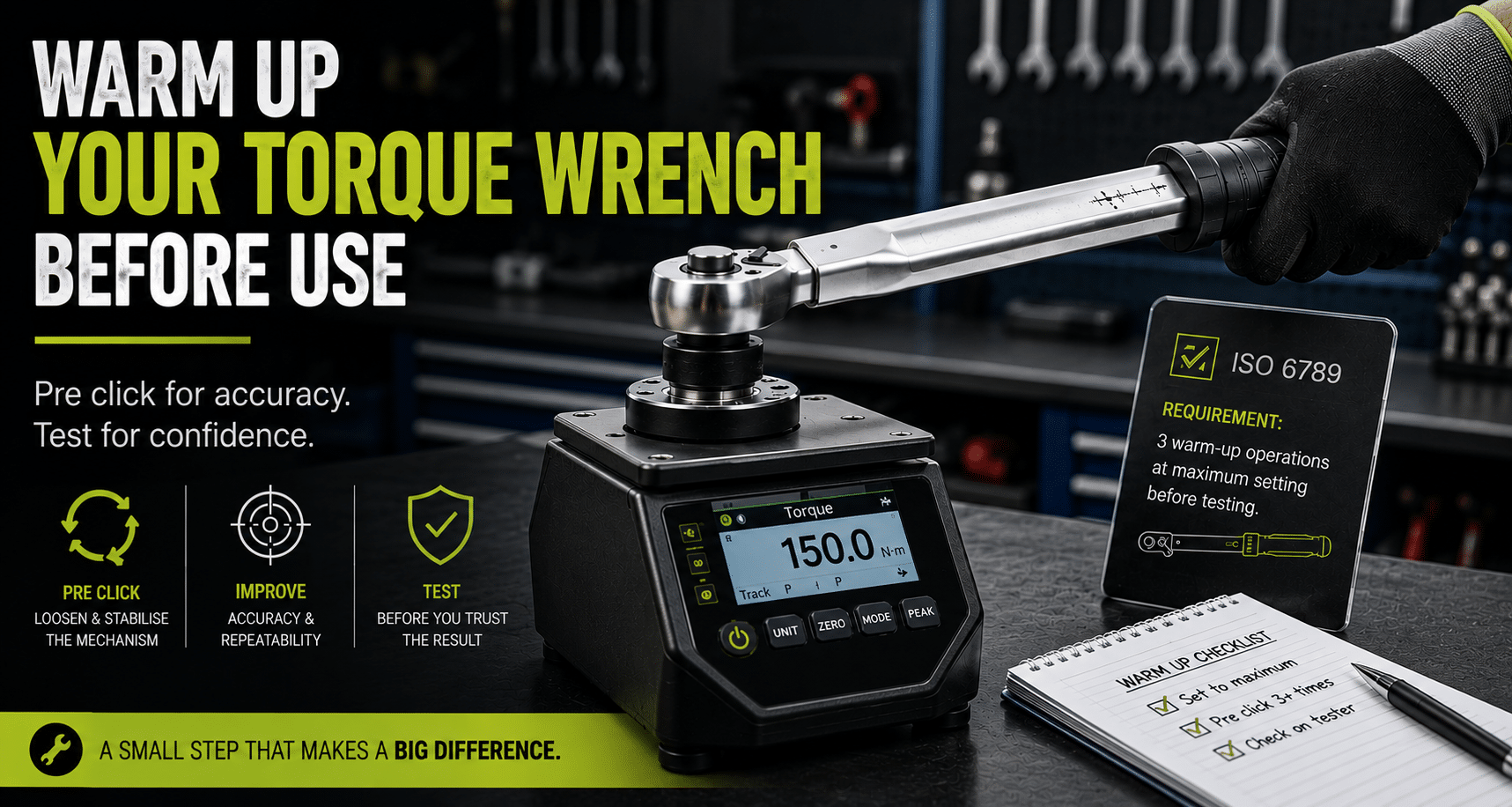
A torque wrench is a precision measuring tool, and like any precision instrument, it needs to be prepared before use. To achieve accurate results, you should warm up your torque wrench before use by applying several pre clicks before taking measurements or tightening critical fasteners.
This warm-up process is normal for all torque wrench brands, including premium manufacturers. A torque wrench that has been sitting unused, especially at a lower setting or stored under load, may not immediately provide accurate torque output. The internal mechanism needs to settle into normal operating conditions before reliable results can be achieved.
What Does “Pre Clicking” a Torque Wrench Mean?
Pre clicking a torque wrench means applying the torque wrench several times before performing your actual work or testing. These initial clicks allow the internal components, including the spring, adjustment mechanism, and load-bearing surfaces, to move freely and stabilise.
Without warming up your torque wrench, the first few operations may not accurately represent the true torque setting. In many cases, the wrench will apply more torque than expected, which can lead to over-tightening.
Although over-torque is the most common result from a cold torque wrench, some tools can under-torque when they have not been warmed up. This is less common but highlights why proper preparation is important.
A Real Example from Torque Wrench Calibration
During a recent calibration of a high-end Norbar torque wrench, the effect of warm-up clicks was clearly demonstrated.
When the tool was first tested, it showed an initial error of approximately +50 Nm. After performing repeated clicks at the test setting, the error gradually reduced. After around eight clicks, the results stabilised and reached the expected performance level.
This demonstrates that even premium torque tools from respected manufacturers can require more than the minimum warm-up procedure before producing consistent results.
How Many Times Should You Pre Click a Torque Wrench?
The ISO 6789 standard requires torque wrenches to undergo three warm-up operations at the maximum setting before testing begins in the laboratory.
While this provides a standardised minimum requirement for calibration laboratories, three clicks may not always be enough in practical situations. Some torque wrenches may require additional cycles before the mechanism fully settles.
For everyday workshop use, a good practice is to apply several clicks before relying on the torque wrench for critical applications. If the tool has been stored for a long period, has been adjusted to a different torque range, or is being used for important fasteners, additional warm-up cycles may be beneficial.
How Can Workshops Check Their Torque Wrench Before Use?
One way workshops can monitor torque wrench performance between formal calibrations is by using a torque tester.
A digital torque tester, such as a Warren & Brown Digital Torque Tester, allows technicians to quickly check their torque wrench before use and identify when the tool has reached a stable and repeatable condition.
This type of checking can reveal issues such as:
- A torque wrench that requires excessive warm-up before stabilising
- A tool producing inconsistent results
- A wrench that may have been damaged or incorrectly adjusted
- Changes in performance between calibration periods
A workshop torque tester provides valuable information about the condition of a torque wrench and can help prevent unexpected results.
A Torque Tester Does Not Replace Calibration or Conformance Checks
While a torque tester is an excellent workshop tool, it does not replace regular calibration or conformance testing.
Workshop torque testers are generally not accurate enough to meet the requirements of ISO 6789 compliance testing. They are designed as a practical checking tool, not as a replacement for a laboratory-grade calibration system.
Regular calibration verifies that a torque wrench meets required accuracy limits and provides traceable results. A workshop tester simply provides an additional layer of confidence between calibration intervals.
The best approach is to combine regular calibration with routine workshop checks. This ensures torque wrenches remain reliable while also identifying potential problems before they affect critical applications.
Final Thoughts
Taking a few moments to warm up your torque wrench before use is a simple step that can significantly improve accuracy. Pre clicking the tool allows the internal mechanism to settle and reduces the risk of incorrect torque application.
Even high-quality torque wrenches can produce inaccurate results when used cold. By incorporating warm-up clicks, using a workshop torque tester, and maintaining regular calibration schedules, workshops can improve reliability, protect components, and maintain confidence in every torque application.
Contact us today to discuss your testing requirements.