
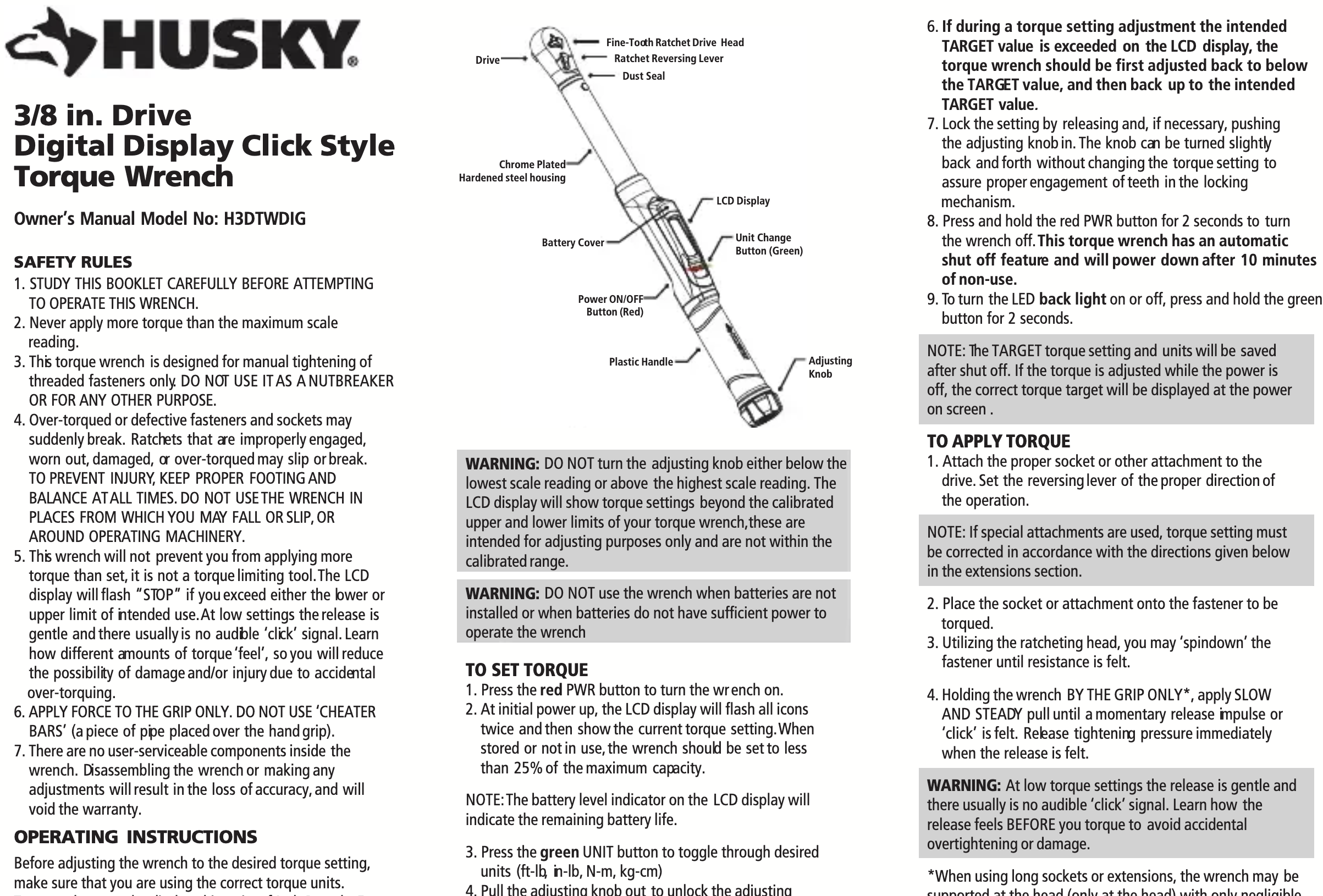
Using a torque wrench correctly is just as important as having it calibrated. Even a perfectly calibrated tool can produce inaccurate results — or suffer premature damage — if it is used incorrectly.
One of the most overlooked aspects of torque wrench care is simply following the manufacturer’s operating instructions. Different brands and models may have slightly different requirements, and ignoring them can lead to inaccurate torque application, costly repairs, or complete tool failure.
If you rely on torque equipment for critical fastening tasks, here are some key manufacturer recommendations that should never be ignored.
Always Use the Correct Hand Position
Most torque wrench manufacturers specify where the user should grip the handle during operation. This is particularly important for click-type torque wrenches.
Many click wrenches are designed with a marked grip section or floating handle. This area ensures force is applied at the correct point of leverage.
Gripping the tool too high on the handle can alter the effective lever length and impact torque accuracy. Gripping too low may create similar issues.
This is especially relevant for:
- Mechanical click torque wrenches
- Dial torque wrenches
- Beam torque wrenches
- Adjustable torque screwdrivers
Consistent hand positioning helps maintain the accuracy the tool was calibrated to deliver.
Be Careful When Using Extensions
Extensions are another area where users often run into trouble.
A standard straight socket extension typically does not affect torque output because it does not change the overall lever length of the wrench.
However, crow’s foot attachments and other offset extensions can alter the effective torque being applied.
For example:
- Hydraulic fittings
- Hard-to-reach fasteners
- Confined mechanical spaces
If an extension changes the overall length of the torque wrench, the actual torque at the fastener may differ from the torque setting on the tool.
Many manufacturers provide formulas or charts for calculating adjusted torque values when using these accessories. If they do not, consult a calibration provider before proceeding.
Never Use a Torque Wrench as a Breaker Bar
This is one of the most common causes of torque wrench damage.
Torque wrenches are precision instruments designed for controlled tightening — not loosening seized fasteners.
Using a torque wrench as a breaker bar can cause:
- Rounded ratchet gear teeth
- Broken pawl mechanisms
- Bent internal components
- Spring damage
- Loss of calibration accuracy
We regularly see torque wrenches arrive for repair after being used to crack loose stubborn bolts.
Often the internal ratchet gears become rounded or damaged due to excessive force. Once this happens, the wrench may begin slipping under load or fail completely.
A dedicated breaker bar is built for this type of force. Use the correct tool for loosening fasteners and reserve your torque wrench for final tightening.
Do Not Exceed the Rated Capacity
Every torque wrench has a specified operating range.
Using the tool above its maximum rated torque can permanently damage internal components and affect calibration performance.
Repeated overloading may lead to:
- Broken internal springs
- Damaged click mechanisms
- Reduced repeatability
- Complete tool failure
If the required torque is near the upper limit of your wrench, consider using a larger-capacity model.
Apply Force Smoothly
Most manufacturers recommend applying slow, steady force when tightening fasteners.
Jerking the handle or applying sudden force can cause:
- Torque overshoot
- Inconsistent readings
- Increased wear on internal components
For click torque wrenches, stop applying force immediately after the tool clicks.
Repeatedly pulling after the click can over-tighten the fastener and damage the mechanism.
Use the Correct Direction
Some torque wrenches are designed for clockwise tightening only, while others are bi-directional.
Using a single-direction wrench incorrectly can result in inaccurate readings or internal damage.
Always verify the tool’s intended operating direction before use.
Read the Manual Before First Use
It sounds obvious, but many torque wrench failures happen because users assume all tools operate the same way.
Manufacturer manuals often include important instructions covering:
- Storage requirements
- Calibration intervals
- Approved accessories
- Operating limitations
- Maintenance procedures
A quick read can prevent expensive mistakes later.
Why Proper Use Protects Calibration Accuracy
Calibration confirms your torque wrench is performing correctly at the time of testing.
Poor handling practices can quickly undo that accuracy.
Following manufacturer recommendations helps:
- Maintain measurement accuracy
- Extend tool lifespan
- Reduce repair costs
- Improve workplace safety
- Protect critical bolted assemblies
A torque wrench is a precision instrument — treat it like one.
Need Torque Wrench Calibration or Repairs?
If your torque wrench has been overloaded, damaged, or is no longer performing correctly, Torque Lab can help.
We provide torque wrench calibration, inspections, and repairs for a wide range of torque equipment.
Contact us to discuss your calibration requirements.