
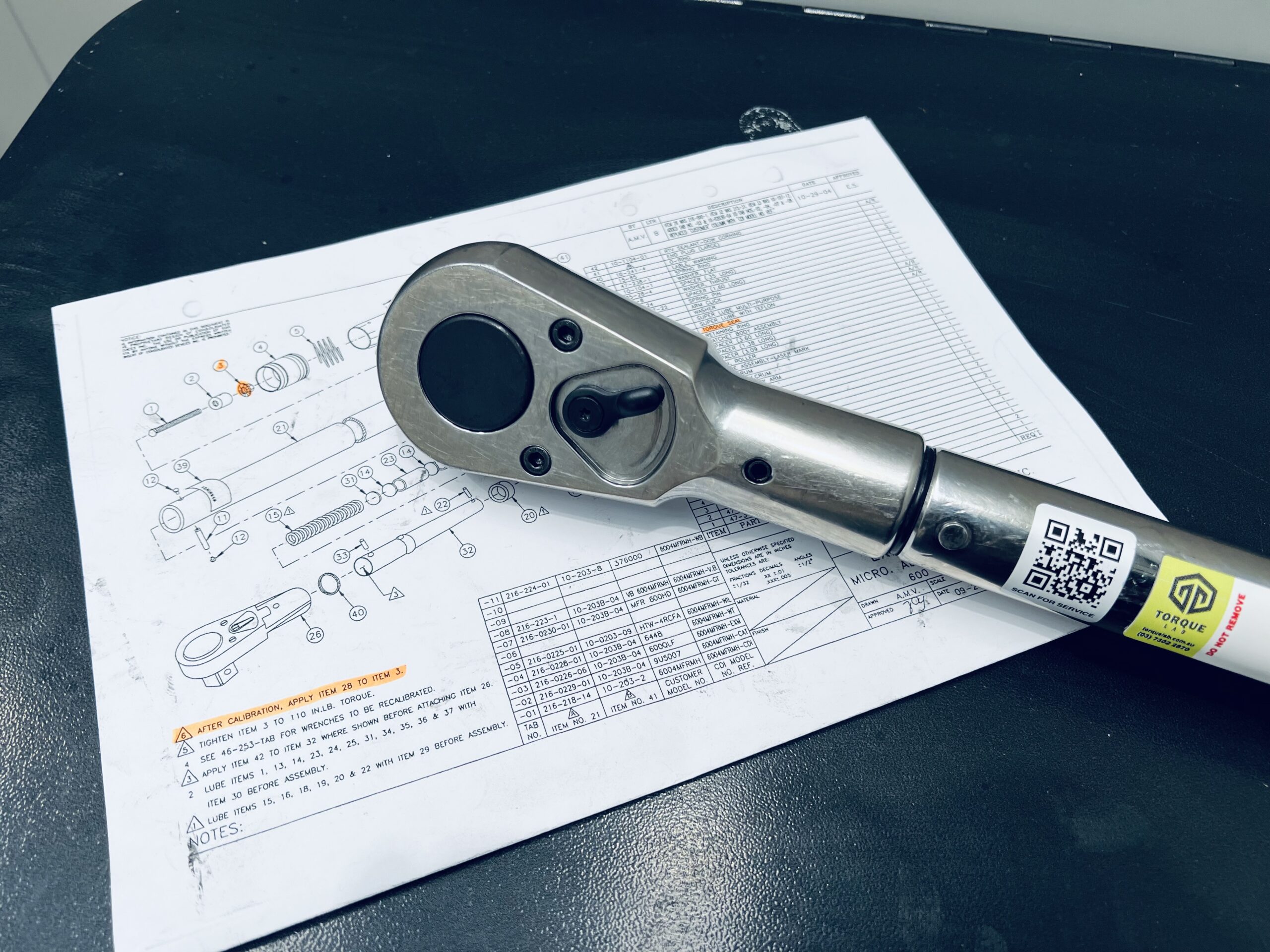
Torque wrenches are precision tools designed to apply accurate torque to critical fasteners. Like any mechanical instrument, they wear over time — and misuse can speed that process up considerably.
Ignoring early warning signs can lead to inaccurate torque application, damaged fasteners, failed assemblies, and costly downtime. Whether you use a click torque wrench, dial wrench, beam wrench, or torque screwdriver, recognising problems early can save you money.
Here are the most common signs your torque wrench needs repair.
The torque application is skipping or slipping
One of the clearest warning signs is when the wrench appears to “skip” during torque application.
Instead of applying smooth force, the internal mechanism may suddenly slip under load. In many click-type torque wrenches, this can happen when the internal gear teeth become rounded or damaged.
A common cause is using the torque wrench as a breaker bar to loosen tight fasteners.
Torque wrenches are built for controlled tightening — not for breaking seized bolts loose. Applying excessive reverse force can damage the ratchet head and round off the gear teeth. Once this happens, the wrench may:
- Skip under load
- Fail to engage correctly
- Slip unexpectedly
- Become unsafe to use
If your torque wrench starts slipping, stop using it immediately and have it inspected.
The wrench no longer clicks consistently
Click torque wrenches should produce a clear and repeatable release at the selected torque value.
Signs of trouble include:
- The click feels weak
- The click happens too early
- The click happens too late
- The wrench sometimes clicks and sometimes does not
This may indicate internal wear, spring issues, contamination, or mechanical damage.
Calibration results are failing
If your torque wrench repeatedly fails calibration, repair may be required before recalibration can be completed.
Common causes include:
- Worn internal components
- Damaged springs
- Lubrication breakdown
- Improper storage
- General mechanical wear
Calibration verifies performance — but it does not fix mechanical faults.
The adjustment mechanism feels rough or jammed
The adjustment handle should rotate smoothly.
If you notice:
- Grinding
- Tight spots
- Seized adjustment collars
- Difficulty locking settings
internal threads or adjustment components may be damaged.
This often occurs when tools are exposed to dirt, moisture, or lack of maintenance.
Visible physical damage
Inspect your torque wrench regularly for obvious physical issues such as:
- Cracked handles
- Bent shafts
- Corrosion
- Damaged ratchet heads
- Missing components
Even minor visible damage can affect calibration accuracy.
The tool was dropped
Dropping a torque wrench can knock internal components out of alignment.
Even if the wrench appears fine externally, internal damage may have occurred.
If a torque wrench has been dropped, it should be checked before returning to service.
The readings drift over time
For electronic or dial torque tools, drifting readings may indicate:
- Sensor issues
- Electrical faults
- Internal wear
- Battery corrosion
If readings appear inconsistent, repair may be required.
Strange noises during operation
Grinding, clicking in the wrong place, rattling, or unusual noises can point to internal damage.
Precision tools should operate smoothly. Unexpected sounds usually indicate wear.
Why prompt repairs matter
Using a damaged torque wrench can result in:
- Under-tightened fasteners
- Over-tightened fasteners
- Product failures
- Safety risks
- Expensive rework
Repairing a torque wrench early is often far cheaper than replacing damaged equipment or dealing with failed assemblies.
Preventing torque wrench damage
Good habits extend the life of your tool:
- Never use it as a breaker bar
- Store it correctly
- Keep it clean
- Calibrate it regularly
- Follow manufacturer instructions
- Avoid dropping it
Proper use dramatically reduces repair costs.
Torque wrench repair services
At Torque Lab, we inspect, repair and calibrate all major brands of torque equipment. If repairs are not economical, we can also recommend replacement options.
If your tool is showing any of these signs your torque wrench needs repair, contact us to discuss your calibration requirements.