
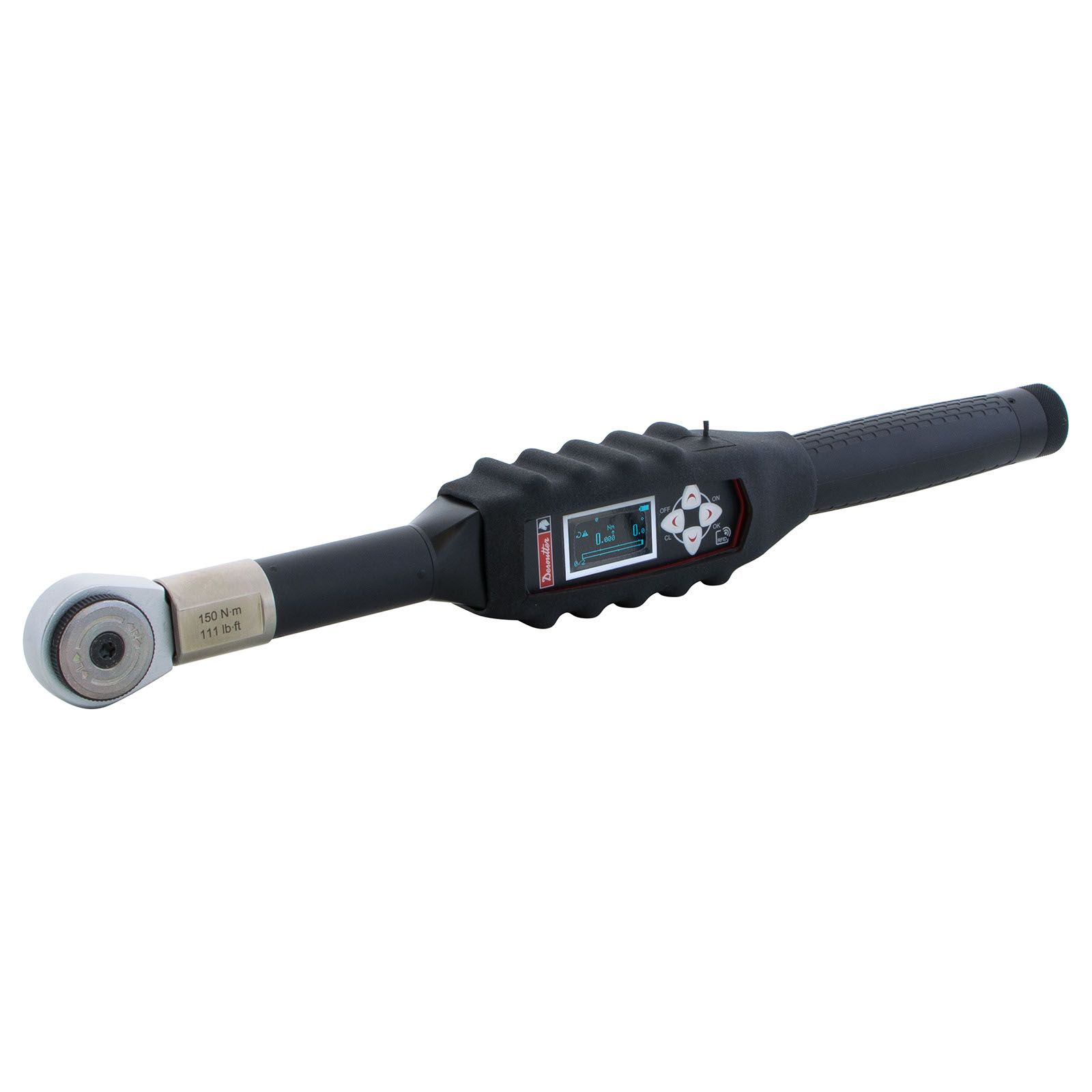
If you’re buying a torque wrench, one of the biggest decisions is whether to go with a digital (electronic) model or a traditional click-type wrench.
Both have their place, but the right choice depends on your application, budget, and how the tool will be maintained over time.
The Key Difference
A click torque wrench uses a mechanical mechanism that produces an audible and tactile “click” when the set torque is reached.
A digital torque wrench uses electronic sensors to measure torque and typically provides visual, audible, or vibrating alerts.
On paper, digital tools appear more advanced—but that doesn’t always make them the better choice.
Accuracy: Does It Really Matter?
Digital torque wrenches are generally more accurate, often around ±2%, compared to ±4% for many click-type wrenches.
That sounds like a significant difference, but in many real-world applications, ±4% is already well within acceptable limits.
Unless you’re working in highly critical or tightly controlled environments, the extra accuracy may not deliver any practical benefit.
Cost: A Major Consideration
One of the biggest differences is price.
A good quality, professional-grade click torque wrench is typically less than half the cost of a digital torque wrench.
Electronic models can cost up to $2000, depending on the brand and features.
For many users, that price difference is hard to justify—especially when a mechanical wrench can perform the job reliably.
Reliability and Durability
Click-type torque wrenches are known for their durability and simplicity. With proper care, they can provide consistent performance over a long period.
Digital torque wrenches, on the other hand, rely on electronics, sensors, and batteries. This introduces more points of potential failure, particularly in harsh environments.
Serviceability and Repairs
This is where the difference becomes more important.
Click-type torque wrenches are generally serviceable and repairable. Worn components can be replaced, and the tool can often be restored to specification.
Digital torque wrenches are a different story.
If an electronic torque wrench is found to be out of specification during calibration or a conformance check, it may need to be returned to the manufacturer for adjustment or repair. They are typically not easy to service locally.
This can lead to:
- longer downtime
- higher repair costs
- limited repair options
When a Digital Torque Wrench Makes Sense
There are situations where a digital torque wrench is the better option.
These include:
- applications requiring higher accuracy
- data recording or traceability requirements
- environments where visual or audible feedback is preferred
In these cases, the additional cost may be justified.
When a Click Torque Wrench Is the Better Choice
For most users, a high-quality click torque wrench offers the best balance of:
- reliability
- affordability
- serviceability
- ease of calibration
In many applications, it delivers everything you need without the added complexity of electronics.
Final Thoughts
Digital torque wrenches offer higher accuracy and additional features, but they come at a significantly higher cost and can be more difficult to service.
For many applications, a professional-grade click torque wrench is the more practical and cost-effective choice.
The key is matching the tool to your actual requirements—not just choosing the most advanced option available.
Contact us to discuss your calibration requirements or to get advice on selecting the right torque equipment for your application.