
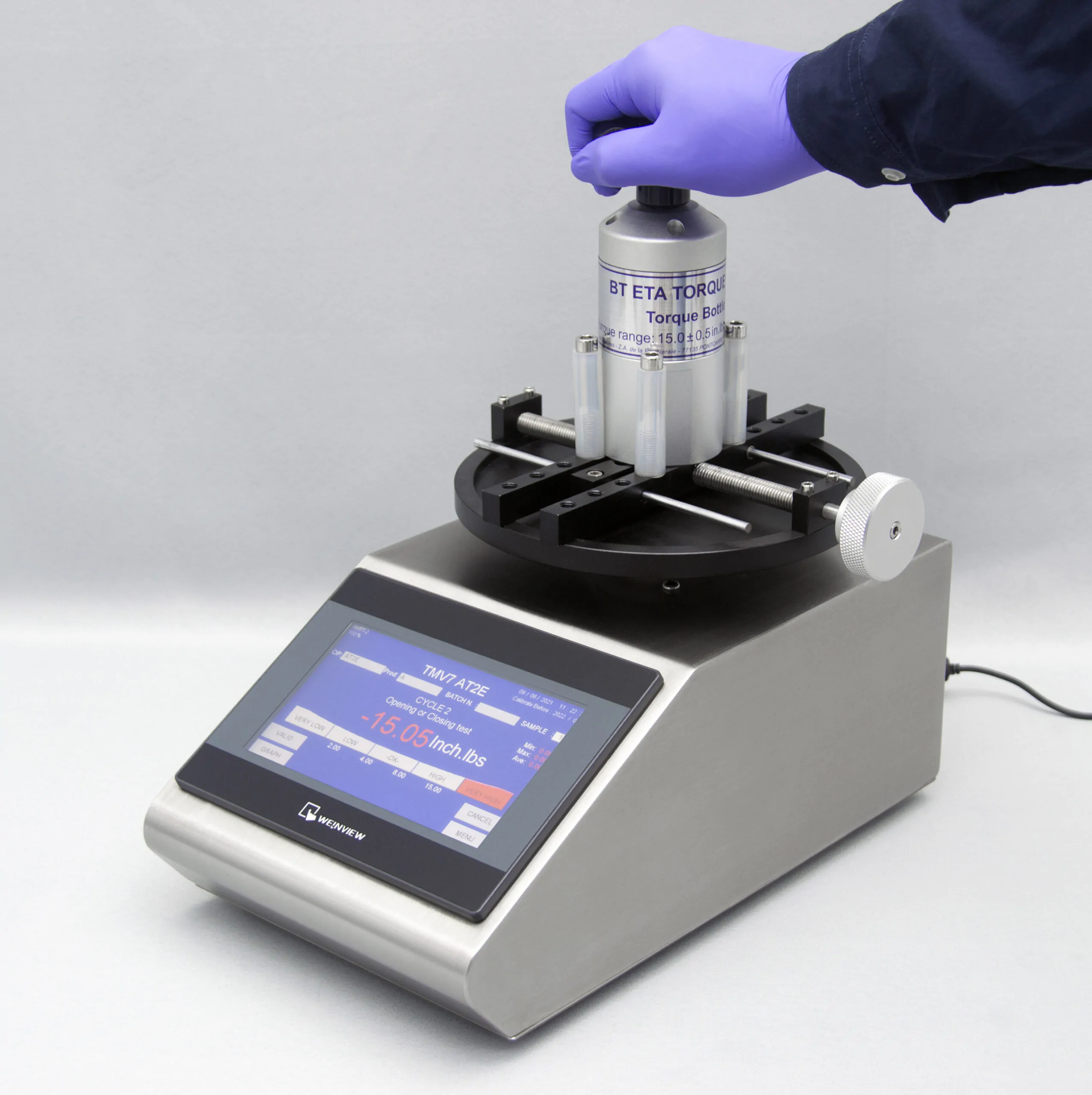
Bottle cap torque testers play a critical role in packaging quality control. Proper bottle cap torque tester recalibration is essential to ensure continued precision and reliability. Whether you’re testing plastic beverage caps, pharmaceutical closures, cosmetic containers, or food packaging lids, the accuracy of your tester directly affects product consistency, compliance, and customer satisfaction.
If the tester drifts out of tolerance, closures may be applied too loosely or too tightly. That can lead to leaking products, damaged packaging, failed quality audits, or customer complaints.
So, how often should a bottle cap torque tester be recalibrated? The answer depends on how frequently it’s used, the environment it operates in, and whether it has experienced damage or unusual wear.
Follow the manufacturer’s recommended calibration interval
The first place to start is the manufacturer’s documentation. Many bottle cap torque tester manufacturers recommend calibration at least every 12 months.
However, this is only a general guideline. A yearly interval may be suitable for equipment used in low-volume testing environments, but businesses performing frequent production checks may require more regular verification.
If your organisation operates under strict quality systems such as ISO standards, food safety frameworks, or pharmaceutical regulations, your documented calibration schedule may also be dictated by internal quality procedures.
Recalibrate after heavy usage
Bottle cap torque testers used daily in production facilities often experience far more wear than units used occasionally in laboratories.
Frequent testing can gradually affect internal components such as:
- Load cells
- Bearings
- Clamping mechanisms
- Sensors
- Drive systems (on motorised units)
If your tester is being used across multiple shifts or testing large production batches, a shorter calibration interval may help maintain confidence in results.
Recalibrate after repairs or impact damage
If the tester has been repaired, dropped, knocked over, or transported between sites, recalibration should be performed before returning it to service.
Even if there is no visible damage, internal measurement components may have been affected.
Common examples include:
- The tester falling from a bench
- Damage during freight transport
- Internal repairs or component replacement
- Exposure to vibration during relocation
A recalibration confirms the tester is still performing correctly after the event.
Recalibrate if results appear inconsistent
Unexpected torque readings are often an early warning sign.
If operators begin noticing inconsistent results between batches, unusual measurement variation, or readings that do not align with expected application torque, calibration should be investigated.
This is particularly important if:
- Multiple operators are getting different results
- Packaging lines are experiencing increased cap failures
- Products are leaking during transport
- Internal quality checks are being failed
Before assuming calibration drift, it’s also worth checking fixtures, sample setup, and testing procedures.
Consider your compliance requirements
Many manufacturers in food, beverage, medical, and pharmaceutical industries require traceable calibration records.
A valid calibration certificate helps demonstrate that your testing equipment has been maintained correctly and can support audits from customers, regulators, or certification bodies.
Don’t ignore environmental factors
Environmental conditions can affect precision measuring equipment.
Factors such as temperature fluctuations, dust, moisture, and vibration may shorten calibration intervals.
Production environments can be far harsher than controlled laboratory settings, so equipment used on factory floors may require closer monitoring.
Signs your bottle cap torque tester may need recalibration sooner
Watch for these warning signs:
- Readings seem inconsistent
- Failed quality control checks
- Equipment has been dropped
- Tester has undergone repairs
- Calibration due date has passed
- Increased packaging failures
If any of these occur, it may be worth arranging calibration sooner rather than waiting for the annual due date.
Why regular calibration matters
Accurate bottle cap torque testing helps ensure:
- Product seals remain secure
- Packaging remains compliant
- Customer complaints are reduced
- Production waste is minimised
- Audit requirements are met
A missed calibration interval may seem minor until faulty packaging starts reaching customers.
Need bottle cap torque tester calibration?
At Torque Lab, we calibrate bottle cap torque testers in accordance with BS 7882:2017 and can help determine whether your equipment requires calibration, repair, or replacement.
Contact us to discuss your calibration requirements.