
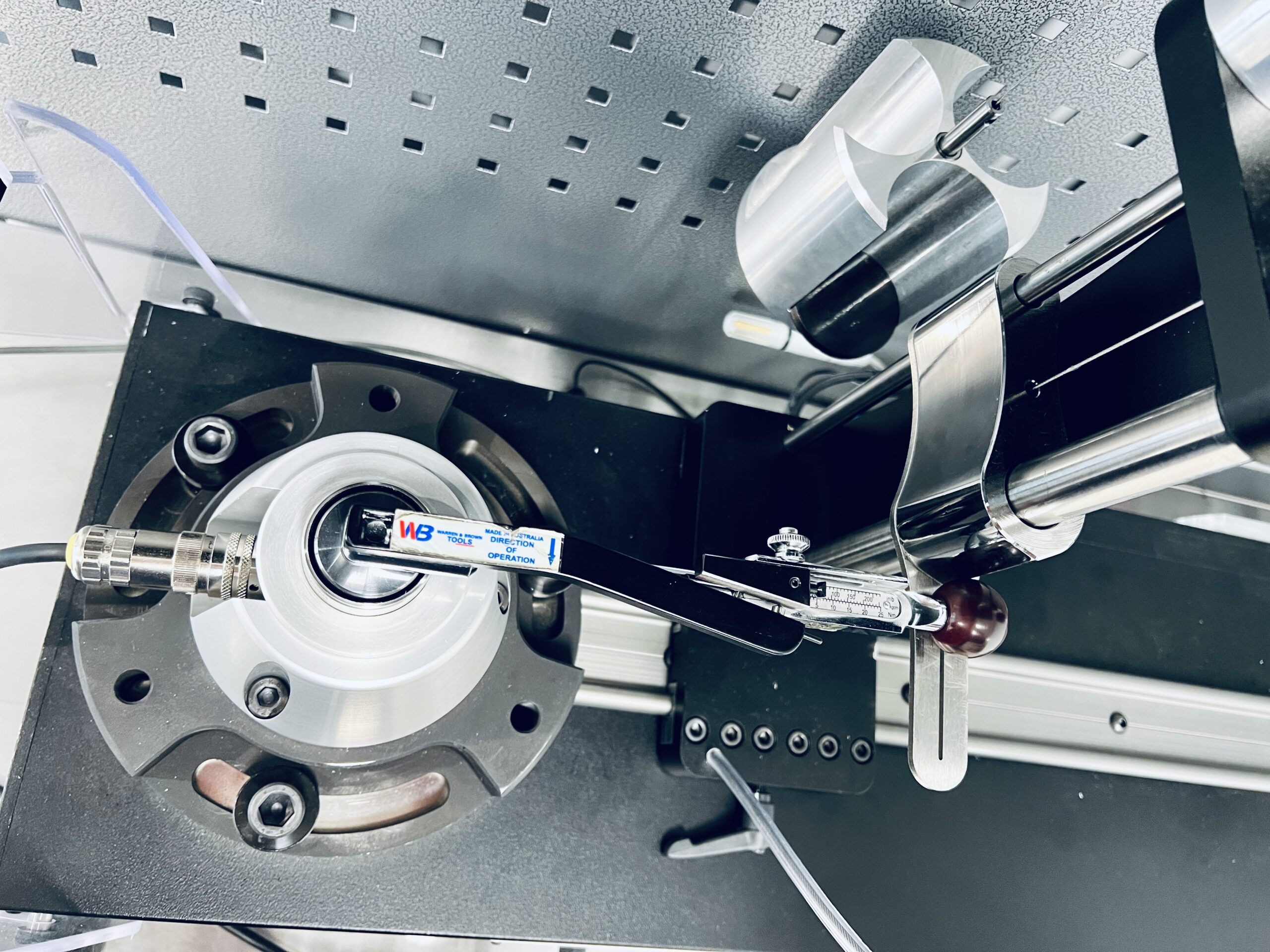
Torque wrenches are torque application tools. Their job is to apply a specified amount of torque to a fastener — and over time, normal use can affect how accurately they perform.
Internal spring fatigue, wear, accidental drops, contamination and improper storage can all impact performance. That’s why regular conformance check or calibration of a torque wrench is important.
For most users, the standard recommendation is every 12 months.
However, heavy usage or strict quality requirements may justify more frequent testing.
The standard recommendation: every 12 months
For general workshop, automotive, industrial and maintenance use, having your torque wrench tested every 12 months is widely accepted as best practice.
An annual check helps identify issues such as:
- Accuracy drift
- Internal wear
- Spring fatigue
- Damage caused by misuse
- Contamination inside the mechanism
Even if the tool still clicks normally, that does not guarantee it is applying the correct torque.
What is a conformance check?
A conformance check verifies whether the torque wrench is applying torque within the manufacturer’s stated tolerance.
For many businesses, this is completely sufficient.
If the tool passes within tolerance, it confirms the wrench is suitable for continued use.
This option is commonly chosen when:
- The tool is used in general workshop environments
- Formal uncertainty calculations are not required
- The customer simply wants confirmation the tool is still performing correctly
For many industries, this is the most practical and cost-effective option.
What is a calibration?
A calibration goes further than a conformance check.
It verifies the tool’s performance and also calculates measurement uncertainty.
This provides additional traceability and technical documentation.
Calibration may be required when:
- Your quality system demands it
- Your customer requests it
- You require uncertainty reporting
- You operate in highly controlled industries
This is more common in sectors such as aerospace, defence and specialised manufacturing.
Heavy use may require more frequent checks
Not every torque wrench sees the same workload.
A torque wrench used occasionally in a small workshop may only need annual testing.
But tools used daily in:
- Heavy vehicle workshops
- Mining operations
- Manufacturing facilities
- Fleet maintenance environments
may require more frequent conformance checks or calibration of a torque wrench.
You may need shorter intervals if:
- The tool is used every day
- It regularly operates near maximum capacity
- It has been dropped
- It works in harsh environments
- It shows signs of misuse
Some businesses move to six-month intervals for heavily used tools.
Some quality systems require stricter schedules
In some workplaces, the testing interval is determined by company procedures rather than actual usage.
This may be driven by:
- ISO requirements
- Internal audits
- Customer contracts
- Traceability requirements
- Risk management procedures
Even lightly used tools may need more frequent testing if company policy requires it.
Don’t attempt to calibrate the tool yourself
We occasionally hear from people trying to calibrate their own torque wrench.
This is not recommended.
Without a proper torque wrench calibrator, there is no reliable way to verify performance.
As covered in our blog post “Can You Calibrate a Torque Wrench Yourself?”, professional testing requires specialised equipment and controlled procedures.
Attempting it yourself can create false confidence and may leave the tool operating outside tolerance.
When should you bring your torque wrench in?
A good rule is:
- Every 12 months as a baseline
- More often for heavy use
- Immediately after damage
- Earlier if required by your quality system
Regular testing helps ensure your torque wrench continues applying the correct torque when it matters most.
Final thoughts
For most users, an annual conformance check or calibration of a torque wrench is the right starting point.
Heavily used tools may require shorter intervals, and some businesses may need stricter schedules due to compliance requirements.
The important thing is making sure your tool is tested properly using suitable equipment.
Contact us to discuss your calibration requirements.