
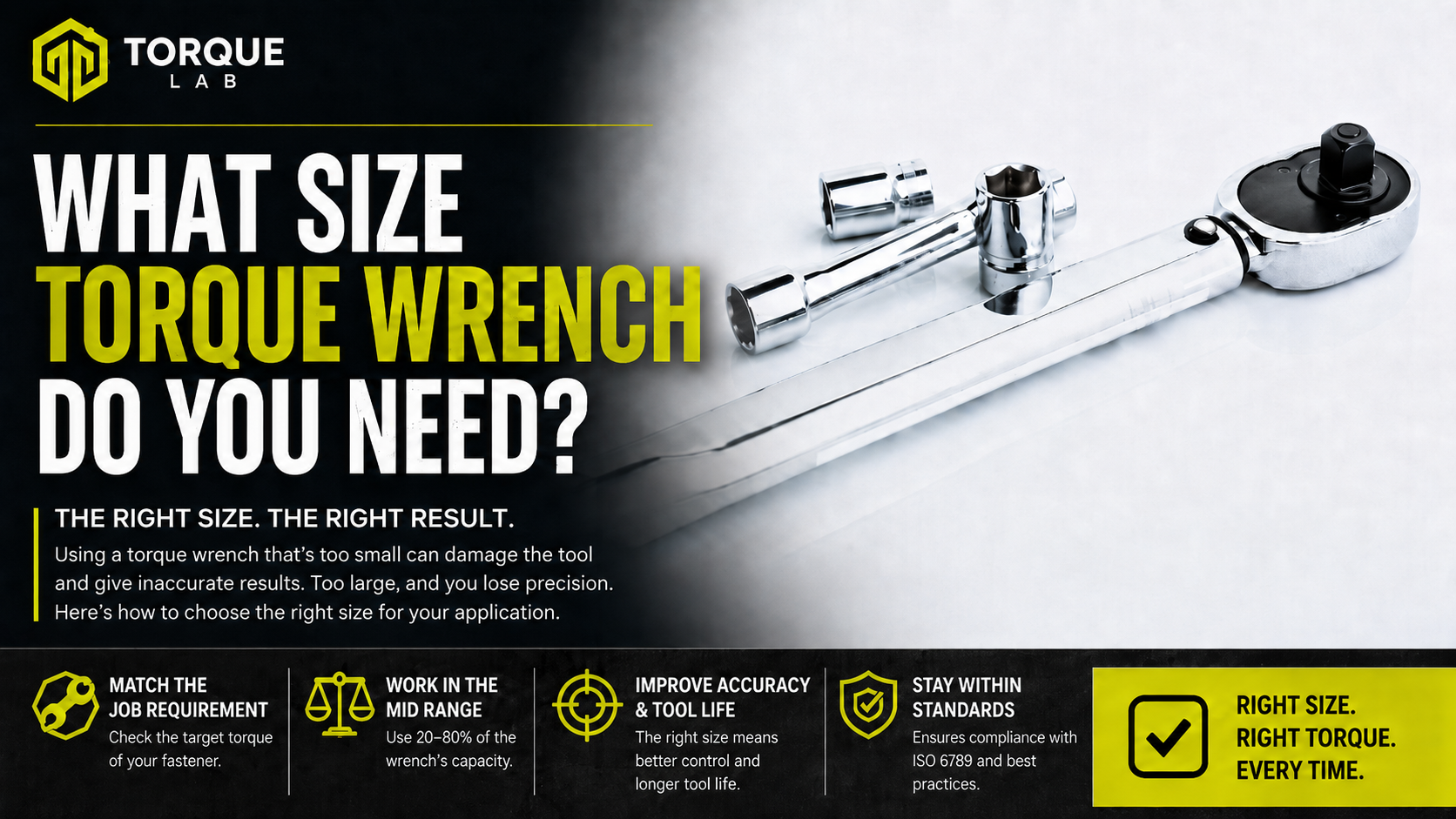
Choosing the right size torque wrench is mainly about matching the tool to the torque range you need to apply. If the wrench is too small, it will be overloaded and inaccurate. If it is too large, it becomes awkward to use and less precise at lower settings.
So the key question is: what size torque wrench do you need for your application?
Matching Torque Range to Your Application
The most important factor is the amount of torque you actually need to apply.
Every torque wrench has a defined operating range, and accuracy is typically best in the middle of that range. For this reason, it is not ideal to run a wrench at its maximum capacity all the time.
For example, if you need to apply around 300 Nm, it is generally recommended to choose a torque wrench with a higher capacity, such as 400 Nm.
This approach helps in two ways:
- it keeps you within a more accurate operating range
- it reduces stress on the internal mechanism
Why a Higher Capacity Tool Can Be Easier to Use
What size torque wrench you need is not just about numbers on a scale. Tool length plays a practical role as well.
A higher capacity torque wrench is usually longer, which increases the lever arm. This makes torque application easier because:
- less physical effort is required
- load is applied more smoothly
- there is better control during tightening
As a result, a slightly oversized tool (within reason) can actually improve usability.
The Importance of Working Space
Another key factor is physical space.
Even if a torque wrench is technically suitable for the job, it still needs to fit into the area you are working in.
You should consider:
- clearance around bolts or fasteners
- access angles
- obstructions such as guards, frames, or engine components
In tight spaces, a long torque wrench may not physically fit, even if it is the correct capacity. In these cases, a shorter or differently designed tool may be required.
Avoiding the Wrong Size Torque Wrench
Using the wrong size torque wrench can create problems.
If the tool is too small:
- it may be over-torqued
- accuracy can be compromised
- internal components may wear prematurely
If the tool is too large:
- it becomes difficult to manoeuvre
- access becomes restricted
- accuracy at lower torque settings may be reduced
Balancing these factors is essential for reliable results.
Practical Selection Approach
A simple way to choose the correct tool is:
- identify your required torque value
- select a wrench that places this value in the middle-to-upper portion of its range
- check that the physical size fits your working environment
This ensures both accuracy and usability are maintained.
Final Thoughts
What size torque wrench you need depends on more than just the torque value. While capacity is the starting point, real-world usability is just as important.
Choosing a slightly higher capacity tool can make torque application easier and more controlled, provided it still suits the physical space you are working in.
The best choice is always a balance between accuracy range, tool length, and access requirements.
Contact us to discuss your torque wrench selection or calibration requirements and ensure you are using the right tool for your application.