
So the big question is, should you try to calibrate a torque wrench yourself, or is that a risky shortcut?
Today we’re diving into the topic of self-calibrating your torque wrench. YouTube is full of videos claiming it’s easy and saves money. However, before you grab a weight and some rope, let’s talk about why this approach might not be as clever as it sounds.

So first up, lets address the elephant in the room. I have skin in the game here, I own a torque calibration lab, and I am trying to gain your business, so it is in my interest if I convince you not to attempt to self calibrate your torque wrench.
In this blog I will use some screen shots from videos that are freely available over the internet, that encourage the torque wrench owner to self calibrate the tool. The video presenter will usually say that it is a really easy process, and there is no need to send your tools away to be calibrated. I have picked one video at random, but they are a dime a dozen and all usually follow the same erroneous method.

Why try to calibrate a torque wrench yourself
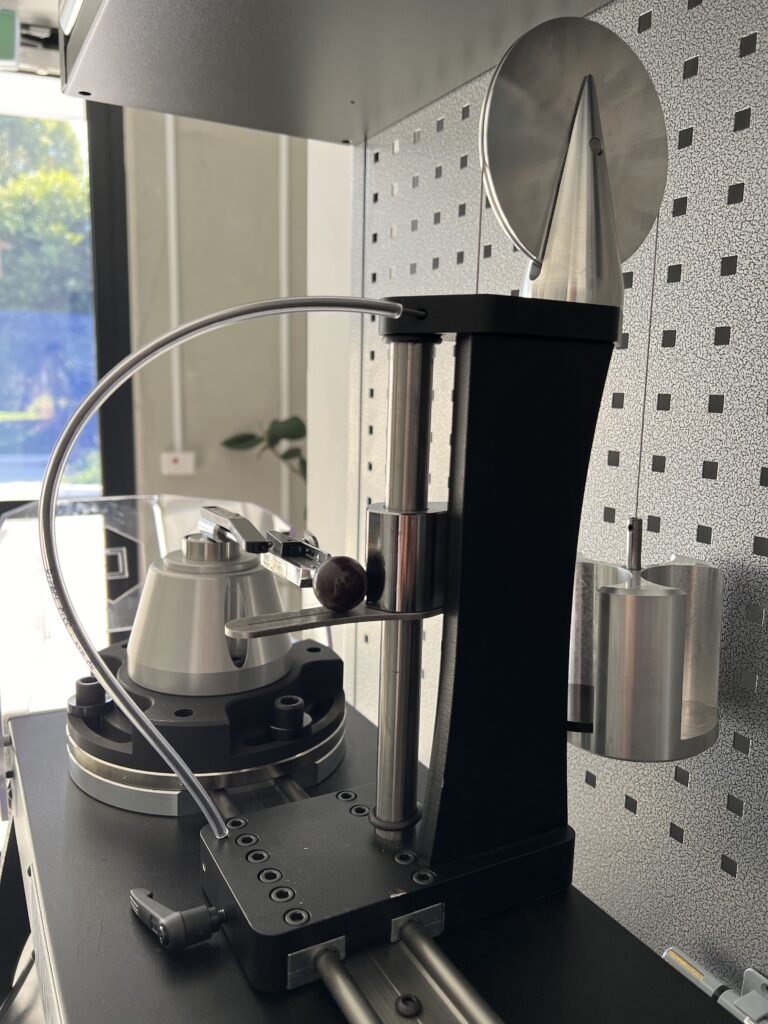
The presenter may advise that if you don’t have a vice, just find a bolt to hang the torque wrench off. This is a really foolish idea as it will increase parasitic forces such as side load. Modern ISO 6789-compliant calibration benches use load-balancing devices to stop the wrench’s weight affecting the result.
Parasitic forces affect DIY torque wrench calibration
In the example below, the vice clamps the torque wrench in place, the weight of the torque wrench is pulling towards the ground due to gravity. This adds a preload torque to the head of the tool. Think of it as a zero error. If the speedometer in your car was stuck on 20kph when your car is stationary, it is logical to suggest that the speedometer may indicate 40kph when the car is in fact travelling 20kph. In this example, the weight of the tool generates a force, that effectively hides the true result.

Single-point testing cannot verify torque wrench accuracy
The presenter will also usually only have one weight to use to hang from the torque wrench. This only allows calibration at one test point. Remember back to the Torque equation, τ=r×Fsin(θ) where:
- τ is the torque,
- r is the lever arm’s length (the distance from the pivot point to the point where the force is applied),
- F is the magnitude of the force applied,
- θ is the angle between the force vector and the lever arm.
Based on this equation, applying one mass creates only one torque value.
A torque wrench operates across a range, for example 110 Nm to 550 Nm. If you test only one point, you cannot confirm accuracy across the full scale. Torque wrenches do not always produce linear torque output. The error may stay low at one setting but increase at another.
ISO 6789 requires testing at 20%, 60%, and 100% of the tool’s range. Testing only one point tells you nothing about how the wrench performs elsewhere.
Uncertainty in weight accuracy during DIY calibration
Regarding the mass, how do you know how accurate the mass is? Has the mass been calibrated? If you weigh your mass on your bathroom scales, have your scales been calibrated? How do you know that it is accurate? Calibration is a precise science, and any variation in these factors will affect the calculated output. In the example that I refer to, the presenter stated that he was using 7.5kg of weights, but when he weighed them on a scale, they turned out to be 6.559kg. Almost 1kg, or about 13% error straight away. So if you just borrow a weight from your home gym, there is potentially a massive error straight away. Also what about the weight of the rope/chain? It all adds up and is never factored into the torque calculation.
Incorrect load point selection causes torque errors
In the example video that I refer to, the presenter then selects a point to hang the weights. He picks an arbitrary point about half way down the handle between the sticker and the “clean bit without any knurling”. That clean bit is the load point. That point is where the load should be applied to ensure accuracy of the torque wrench. Most torque wrenches will have some form of marking or indicator to show the user where the load point is. If you apply force before the load point, you will usually over-torque the fastener.

Measurement errors when calculating lever arm distance
Also a note on the measuring of the distance, the presenter in this video uses a tape measure to measure the distance between the load point and the centre of the square drive, r in the torque equation. The method the presenter uses introduces another area of uncertainty. Firstly, the hook (the metal right angle bit at the end of the tape) on a tape measure is notorious for working loose. The hook on my tape measure moves and shifts by about ±3 mm.. Although small in the scheme of things, it is enough to introduce error in your calculation.
The presenter also fails to lay the tape flat. Instead of measuring a straight line, he measures the hypotenuse of a triangle. That distance is longer than the true lever arm. As a result, the torque calculation becomes incorrect.

Force application errors when supporting the load by hand
The weight at the load point is probably inaccurate. In this example, the presenter is hanging onto the rope to support the weight to try to accurately record the point that the tool “clicks”. What is happening in reality though is that by supporting the load by hand, the presenter is most likely reducing the amount of weight being applied. If you’re bored and want to experiment, go and try to support 7kg of weight with just your thumb and forefinger and see how accurate you think the weight application is. On the flip side, it is also possible that the DIY Calibrator may also pull on the rope subconsciously which will only increase the weight applied.

Incorrect angle of force affects torque calculations
And do you remember the Sin𝜽 part of the Torque equation above? 𝜽 is the angle between the force vector and the lever arm. Torque wrenches are designed so that the force is applied at 90º to the torque wrench body. The sin (sine) of 90º is 1. If the load is applied at exactly 90°, the angle does not affect the torque calculation.
But this is not possible in the self calibration DIY YouTube videos. In all cases, when the torque wrench is mounted in a vice, the weight of the torque wrench body causes the handle to lean towards the ground. This means that when a weight is hung from the handle, the load does not act at 90º.
If you wanted to be precise, you would need to measure the angle precisely and then work out the Sine of that angle, and include that in the torque equation. Of course this is never mentioned…. Obviously this is another source of uncertainty.
Unstable loads lead to inconsistent torque readings
Another factor to consider is whether or not the weight is swinging back and forth. If it is, the load applied at the load point will certainly fluctuate. When we hang weight on a calibration beam to calibrate torque transducers in accordance with BS7882:2017, we have to wait not less than 30 seconds for the load to stabilise. Prior to this, the torque readings will fluctuate, so you cannot obtain accurate or consistent results.
As you can see, you cannot apply an accurate weight with this method, thus rendering your torque calculation incorrect.
Failure to exercise the torque wrench affects results
What about exercising your tool prior to obtaining a reading? All precision equipment must be warmed up and exercised prior to use. An F1 car doesn’t begin a race with a cold engine. An aeroplane doesn’t take off without checking that the engine produces power. In the case of a Torque wrench, exercising a tool 3 – 5 times prior to tightening a fastener, loosens up the internal moving parts and prepares it for use.
I recently ran an experiment on my own Torque wrench where I didn’t exercise the tool. As you can see from the results below, initially the torque wrench was over torquing, however the results stabilised after 4 pre loads. Of course, the DIY Youtube type videos never mention this. If you fail to exercise your tool, you will likely get incorrect results.

Safety risks of home torque wrench calibration
Another thing to consider, OHS… What happens if the rope holding the weight slips of the handle and falls onto your toe? Guaranteed to break a few bones I’m afraid.
DIY torque wrench calibration can void warranty and liability protection
Without testing this wrench on a proper calibrator, we will never know how inaccurate the method was. However, I doubt it could achieve even 10% accuracy. Most manufacturers state an accuracy of 2% to 4%.
If you adjust a torque wrench yourself, you void the professional calibration and may void the warranty as well.
There is also a legal risk. If a failure causes damage or injury, lawyers will investigate the calibration history. If the wrench was not professionally calibrated, responsibility may fall on you.
I could go on, but you get the idea. Don’t risk it. Send your torque wrench to a reputable calibration laboratory. Contact us today to discuss your calibration requirements