
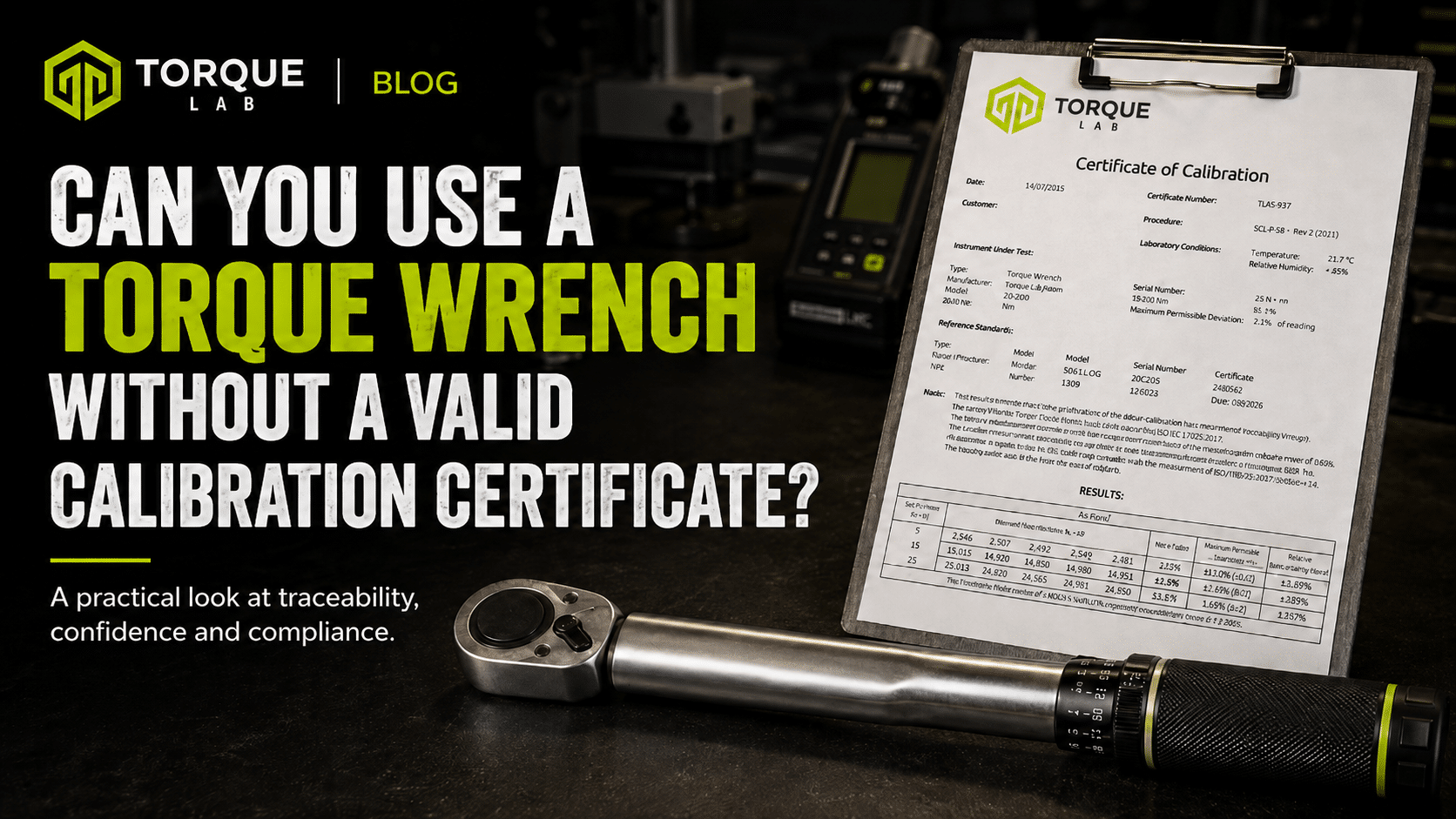
Can you use a torque wrench without a valid calibration certificate? Technically, in many situations there is no direct law that prevents you from doing so. However, that does not mean it is acceptable or risk-free in practice.
A torque wrench is a precision instrument, and without verification, there is no reliable way to confirm it is applying the correct torque.
Why the Calibration Certificate Matters
A calibration certificate is not just paperwork. It is evidence that the torque wrench has been tested against a known standard and found to be operating within tolerance.
Without a valid certificate, you have no documented proof that:
- the tool is accurate
- it meets manufacturer specifications
- it is suitable for controlled work
In quality-controlled environments, that lack of evidence can become a serious issue.
What Happens If You Use a Torque Wrench Without Calibration?
Can you use a torque wrench without a valid calibration certificate? Yes, but the real question is what the consequences are.
Without calibration, the tool may still feel normal in use, but its actual output is completely unknown. This can lead to:
- under-tightened fasteners
- over-tightened components
- inconsistent assembly quality
- premature mechanical failure
The problem is not always immediately visible. Often, issues only appear later in service.
Compliance and Audit Risks
In many industries, calibration records are part of quality system requirements.
If you use a torque wrench without a valid calibration certificate, you may face:
- audit non-conformances
- failure to meet ISO or internal quality standards
- difficulty proving compliance in the event of a failure
Even if the work is technically correct, the lack of documentation can still create problems during audits or investigations.
Liability Considerations
Another important factor is liability.
If a mechanical failure occurs and it is traced back to torque application, one of the first questions asked is whether the tool was calibrated.
Without a valid certificate, it becomes difficult to demonstrate due diligence. This can increase exposure in situations involving:
- product failures
- safety incidents
- contractual disputes
Why Torque Wrenches Drift Over Time
Even high-quality torque wrenches do not stay accurate forever.
Over time, performance can change due to:
- normal wear of internal components
- repeated loading cycles
- accidental drops or impacts
- storage conditions and handling
Because of this, regular calibration is essential to maintain confidence in the tool.
Best Practice Approach
Rather than relying on assumption, the safer approach is straightforward:
- ensure regular calibration intervals are followed
- maintain valid documentation for all torque tools
- use conformance checks where appropriate between calibrations
This ensures the tool remains reliable and defensible in both technical and audit environments.
Final Thoughts
Can you use a torque wrench without a valid calibration certificate? In some cases, yes—but it removes your ability to confirm accuracy and weakens your compliance position.
A torque wrench should always be treated as a controlled measuring device. Without a valid calibration certificate, you are effectively working without confirmation that the tool is doing its job correctly.
Regular calibration is not just administrative—it is part of ensuring reliability, safety, and accountability in any torque-critical application.
Contact us to discuss your calibration requirements or to ensure your torque equipment is properly verified and compliant.