
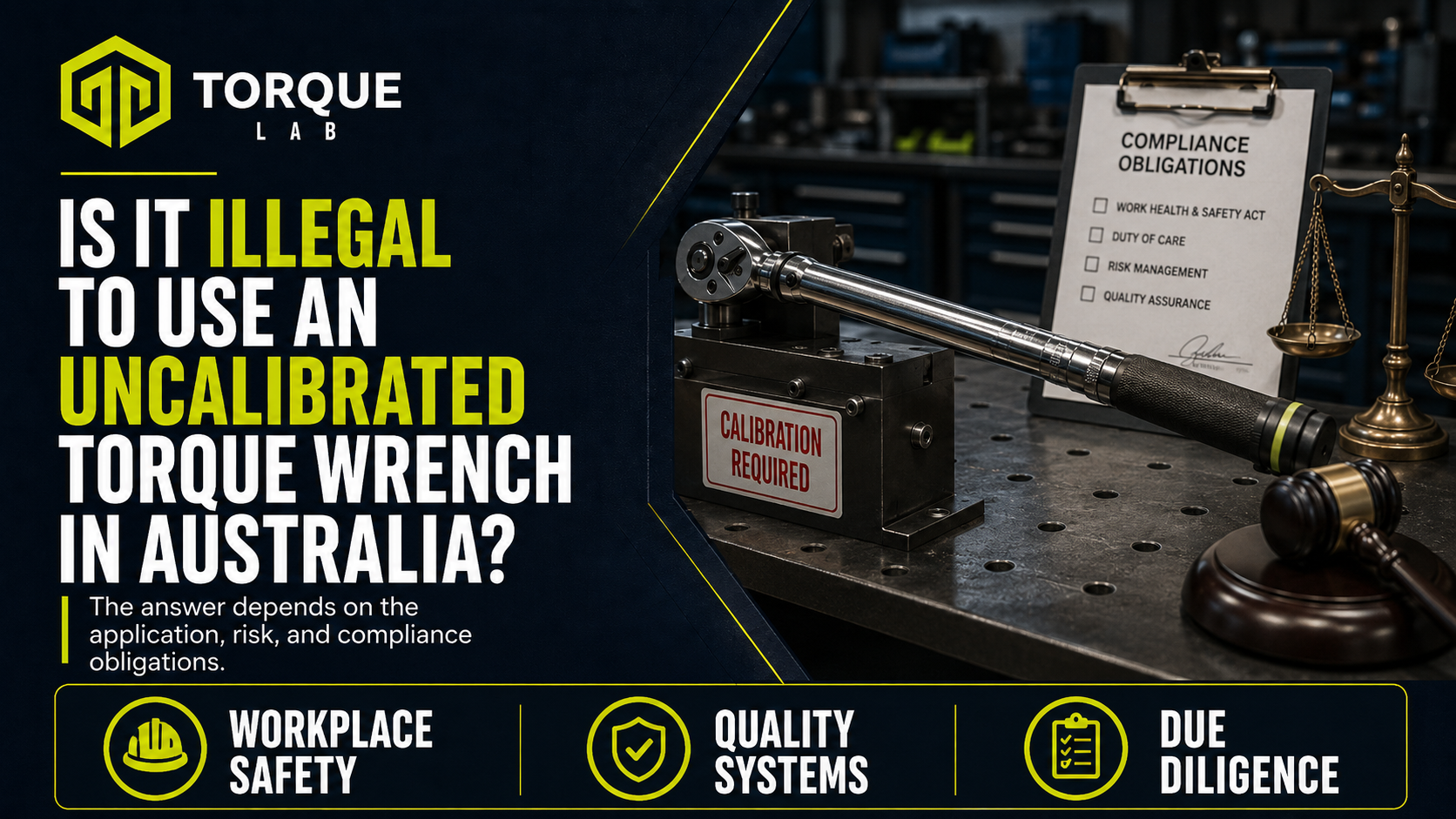
Is it illegal to use an uncalibrated torque wrench in Australia? The short answer is no—it is not automatically illegal. However, that does not mean it is acceptable in all situations.
A torque wrench is a precision instrument. If you are relying on it to apply a specific load to a fastener, you need to be confident that it is actually delivering that value.
Is It Illegal to Use an Uncalibrated Torque Wrench in Australia?
Is it illegal to use an uncalibrated torque wrench in Australia in a general sense? Not necessarily.
There is no blanket law that makes it illegal across all applications. However, the situation changes depending on the industry, the standards you are working under, and the consequences of failure.
In many regulated environments, such as manufacturing, transport, or safety-critical maintenance, using unverified equipment can lead to non-compliance with quality systems or contractual requirements.
Why Calibration Matters
A torque wrench does not stay accurate forever. Over time, internal components wear, settings drift, and performance changes.
The only way to confirm accuracy is through:
Without this verification, you are effectively guessing the torque being applied.
The Risks of Using an Uncalibrated Torque Wrench
Using an uncalibrated torque wrench introduces uncertainty. That uncertainty can lead to incorrect torque application.
For example:
- under-torquing can result in loose fasteners
- over-torquing can damage threads or components
- inconsistent torque can reduce reliability
In many cases, these issues are not immediately obvious but can lead to failures later.
Liability and Compliance
While it may not be illegal, using an uncalibrated torque wrench can expose you to liability.
If a failure occurs and is traced back to incorrect torque application, questions will be asked:
- Was the tool verified?
- Was it within tolerance?
- Is there documentation to support its use?
In addition, audits can highlight gaps in calibration control. This can lead to:
- failed audits
- non-conformance reports
- loss of certification or contracts
Calibration as Standard Practice
Calibrating your torque wrench should be treated as routine maintenance.
In the same way you would not skip servicing your car, you should not skip verifying the accuracy of a torque tool.
Regular calibration ensures:
- confidence in applied torque
- consistency across work
- compliance with quality requirements
It removes uncertainty from a critical part of the process.
How Often Should You Check Your Torque Wrench?
In most cases, torque wrenches should be checked or calibrated at least every 12 months.
However, frequency can vary depending on:
- usage levels
- working environment
- criticality of the application
Higher-use or critical tools may require more frequent verification.
Final Thoughts
So, is it illegal to use an uncalibrated torque wrench in Australia? Not in a general sense—but that does not mean it is without risk.
A torque wrench is only as reliable as its last verification. Without a conformance check or calibration, there is no way to be sure it is performing correctly.
In practice, regular calibration is not just good practice—it is essential for maintaining accuracy, reducing risk, and protecting your work.
Contact us to discuss your calibration requirements and ensure your torque equipment is accurate, compliant, and ready for use.