
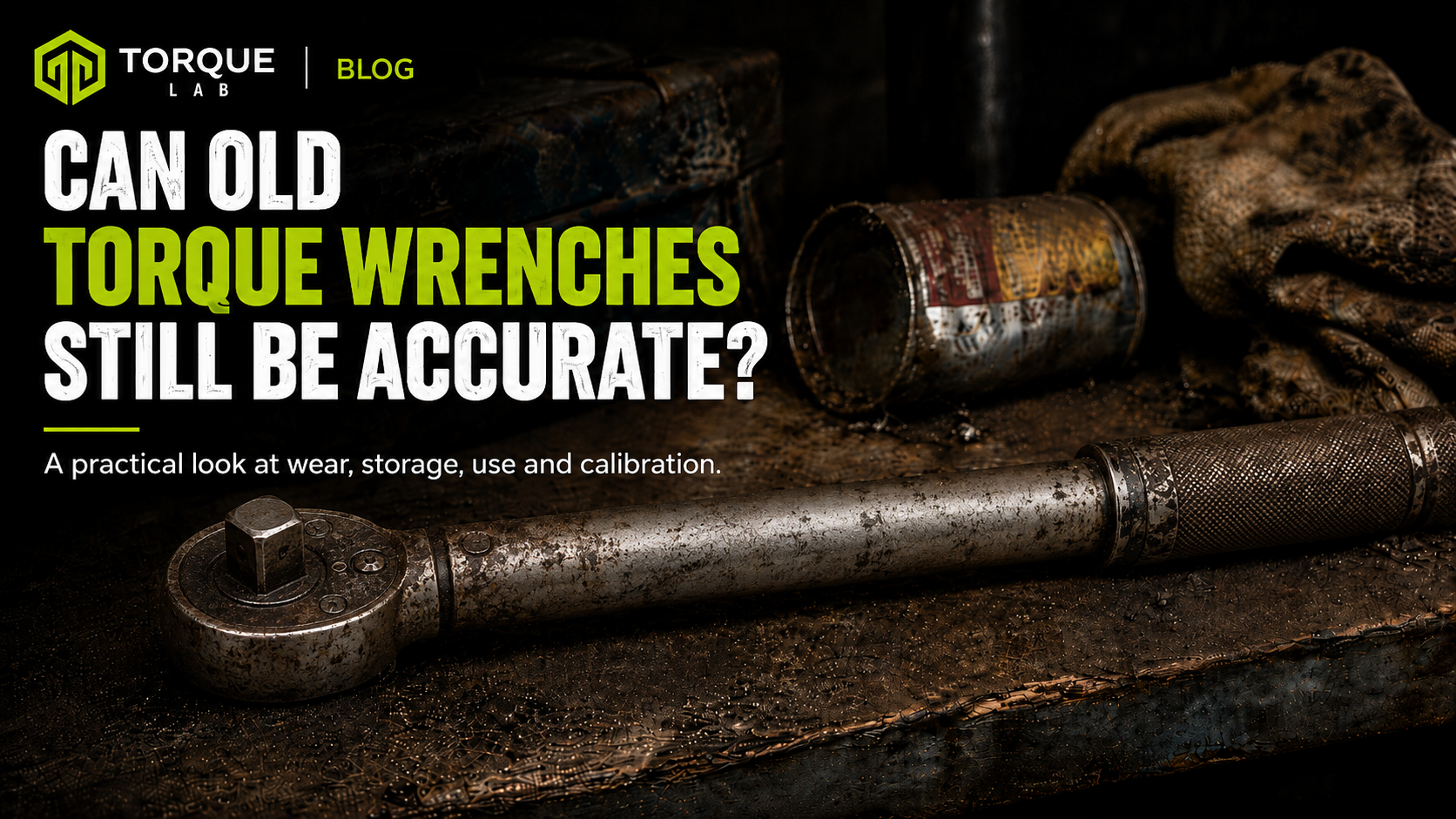
Can old torque wrenches still be accurate? Yes, they can—but it depends heavily on how the tool has been used, stored, and maintained throughout its life. Age alone does not determine accuracy. Condition and handling matter far more.
A well-made torque wrench that has been cared for properly can remain reliable for many years. On the other hand, a poorly treated tool can drift out of specification relatively quickly, even if it is not very old.
How Usage Affects Accuracy Over Time
One of the biggest factors affecting accuracy is usage.
Heavy or continuous use gradually wears internal components. Over time, this can lead to:
- reduced repeatability
- gradual loss of calibration
- increased variation in applied torque
In contrast, tools used occasionally and correctly tend to maintain their accuracy for much longer periods.
Can Old Torque Wrenches Still Be Accurate After Long Storage?
Can old torque wrenches still be accurate if they have been stored for years? Yes, but storage conditions are critical.
For click-type torque wrenches in particular, one common issue is leaving the tool under tension. If the internal spring is left compressed for long periods, it can:
- lose elasticity
- drift out of calibration
- reduce long-term accuracy
This is why it is always recommended to return the setting to the minimum value after use.
Build Quality Makes a Difference
Not all torque wrenches age the same way.
Professional-grade tools from manufacturers such as Warren & Brown, Norbar, Snap-on, and Stahlwille are generally designed for long service life. These tools use higher-quality materials and more robust internal mechanisms.
As a result, they typically:
- maintain accuracy for longer periods
- tolerate repeated calibration cycles better
- withstand higher usage levels
Cheaper tools, on the other hand, tend to degrade more quickly and are often less consistent over time.
The Importance of Regular Servicing
Can old torque wrenches still be accurate without maintenance? Sometimes, but it is not something you should rely on.
Regular servicing and performance verification significantly extend the usable life of a torque wrench. This includes:
- periodic calibration
- conformance checks between calibrations
- inspection for wear or damage
These checks ensure the tool is still operating within specification and help identify issues early.
Proper Storage Practices
Storage plays a surprisingly important role in long-term accuracy.
To help maintain performance, torque wrenches should be:
- stored at their lowest setting (not under load)
- kept in a clean, dry environment
- protected from impact or vibration
- stored in a protective case where possible
Good storage habits reduce internal stress and help preserve calibration over time.
When an Old Torque Wrench Should Be Replaced
Even with good care, there comes a point where a torque wrench may no longer be reliable.
Replacement should be considered when:
- calibration results are inconsistent
- adjustment is no longer effective
- internal components are worn beyond service limits
In these cases, continuing to use the tool introduces unnecessary risk.
Final Thoughts
Can old torque wrenches still be accurate? Yes—provided they have been used correctly, stored properly, and regularly verified.
A well-maintained professional-grade torque wrench can remain accurate for many years. However, neglect, heavy use, or poor storage can significantly shorten its usable life.
Regular calibration, correct handling, and proper storage are the key factors that determine whether an old torque wrench is still fit for purpose.
Contact us to discuss calibration, servicing, or assessment of your torque equipment.